
As I start writing this year-end review, the latest in a long line of year-end rituals, I’m filled with an overwhelming sense of gratitude. Even more than usual. In 2020 so many people around the world got sick, lost their jobs or businesses, or their lives. I want to start this ritual grounded in that reality, to never forget how lucky I am to be here at all.
What feels strangest about the year of COVID is how little it affected us. I don’t quite know what to make of it. The business thrived as millions flocked to online education. My work took off as the concept of a “Second Brain” caught fire. No one close to me got sick, much less had serious complications from COVID. Many of them actually seemed to benefit in many unexpected ways, from having more time to spend with their kids at home, to working in industries that have seen surges in demand during lockdown. Privilege isn’t just about having extra advantages, it’s about having built-in protection against disadvantages.
The biggest change of the year for me was of course the birth of our son Caio. He is just about 2 months old, and I’m still very much grappling with the aftershocks of this momentous life event. What’s clear so far is that he’s prompted a complete inversion of the principles by which I organize my life. I’ve had to go from optimizing completely for my own needs and goals, to optimizing for his. I’ve had to switch from a long-term planning horizon to a very short one, about the time between his dirty diapers. My focus of investment has gone from myself and my skills to his growth and development. And of course, I’ve had to give up all kinds of control – over my time, my sleep, my meals, my free time – in favor of being available for whatever he and Lauren need.
It’s become very clear to me that becoming a “family man” is a decision. It doesn’t happen automatically just because you have a kid. It’s a distinct identity shift that I think has to be by choice. My intention for this year-end review is to lay the foundation for my shift from a work-obsessed to a family-centric life, with my son and wife at the center of my universe. I want everything else in my life to be in service of them, simply because nothing else matters as much as them.
I want to start as I always do, by recapping our successes this year and revisiting the goals I set at the beginning of the year to close the accountability loop.
Signed a book deal for Building a Second Brain
This was the culmination of more than a year of work with my editor and agent. In April my book proposal went to auction between 4 imprints from 3 major publishers, and after a couple rounds of bidding it went to Atria, a division of Simon & Schuster.
It wasn’t quite as dramatic as in the movies, with editors screaming ever higher numbers over the phone in a desperate panic. I wish! Instead, the bids were made in two rounds via email within a 2-hour time window. I sat at my computer staring at my inbox for those two hours as the bids came in. When it was all said and done, Atria won the auction by a wide margin, and I couldn’t be happier to work with them. Read the full story behind the book here.

Recently it was announced that Simon & Schuster is being acquired by the largest of the Big 5 publishers, Penguin Random House, which means my book will be published by the biggest publisher in the U.S. and one of the biggest in the world. That means I’ll potentially have access to more resources and more distribution channels, but it also means I’m part of a much larger portfolio that includes books by heavy hitters like Barack Obama and Danielle Steel. I’ll need to make a real splash to attract the attention needed to stand out among this crowd.
I’m currently working with my editor on the manuscript, which is due July 1, and it will then take around 9-12 months to prepare and distribute the book before its release. I’m expecting it will be available for sale around spring or fall 2022. We currently only have a publisher in the U.S., but are on the lookout for publishers in other countries. Let me know if you know any 😉
That may seem like a long timeline, but there’s a lot for us to do in the meantime. I’m working with a consultant who specializes in book launches, who will be supporting me as I put all the pieces in place for a global release. I’m also working with a skilled designer starting in January to create an entirely new brand identity for Building a Second Brain from the ground up, which will then be used on the website, the course materials, and the book cover, so they are consistent and reinforce each other. Launches are all-important in today’s hit-driven landscape, so I’m moving and aligning every part of the business to make the launch as successful as possible.
Premiered my first documentary film
This also took more than a year, but I finally finished and premiered my first documentary, on the life and work of my father Wayne Forte. It was a tremendously rewarding and meaningful project that continues to produce surprising benefits, from a closer relationship with my father to a deeper understanding of my own tendencies as a father.
Several blog posts came out of this experience, including:
- My Complete Gear Kit for Filming a Personal Documentary, which I put together to encourage others to make amateur films using their smartphones
- How I Made a Documentary Film with Digital Notes, a case study on how my Second Brain uniquely enabled this project
- The Dawn of Personal Documentaries: Democratized Storytelling in an Age of Narrative Disruption, a bigger picture essay on how personalized video-making could reshape how we tell stories, from the entertainment industry to politics and history
I continue to be highly interested in filmmaking as a powerful way to shape people’s reality. The best marketing channels aren’t marketing channels, and I think if stories really are the basic unit of human meaning, we can’t afford to ignore film as the most efficient way of changing people’s minds at scale.
My next video project is a compilation of nearly 40 years of home videos, which my mom recently had digitized. I’m editing down hundreds of hours of footage into a series of 90-minute highlight reels, the first of which we’ll watch as a family on Christmas Eve. The problem with home videos is that the funny and nostalgic moments are buried amidst many hours in which nothing much is happening. I’ve been very pleasantly surprised that with nothing but basic editing skills and some patience I can condense this footage down to a length that we can all enjoy together. I may run a workshop early next year on how I did it.
Praxis passes 1,500 members
In 2020 I joined Everything, an online publication that “bundles” together the writing of several business and productivity writers into one subscription. All existing members of Praxis, my own monthly subscription, were grandfathered in and given free access to Everything. And all existing and future Everything members have access to my entire backlog of more than 70 paywalled posts.
We also announced the first three recipients of the Praxis Fellowship, a paid writing residency which I’ve been looking forward to for a long time. I finally have a platform big enough that I give meaningful exposure to up-and-coming writers. The world of productivity is really stale and homogeneous, and I want to give new voices the chance to introduce new ideas and ways of seeing things into the conversation. They will each be publishing several articles over the next few months available to Praxis and Everything members only.
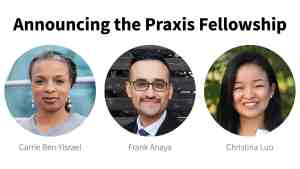
We are now at 1,646 active Praxsters (as I call them), which I’m very happy with. In 2021 I plan on making major investments into Praxis, both the blog in general and the membership program. I’ll explain those in detail later.
More than 1,000 new students enrolled in Building a Second Brain
At the beginning of the year I set an audacious goal to enroll 1,000 new students in my Building a Second Brain course. This was ⅔ of the approximately 1,500 people who had taken it up until then, in 9 cohorts since January 2017. I knew it would be a huge challenge because this year we were only running 2 cohorts, and the price had tripled to better reflect the value it offers.
In April we kicked off cohort 10 with 330 new students, plus a few hundred returning alumni. The biggest improvement we made was hiring Alumni Mentors – past grads of the course who we trained to teach and coach students through the program based on their own past experience.
I couldn’t have predicted how transformative of an impact this would have. Suddenly, the course wasn’t me alone on a stage broadcasting a lecture to a passive room. The Alumni Mentors branched out and began running all kinds of special workshops and breakout sessions on every aspect of the Second Brain curriculum, and beyond. They delivered tutorials on how to use Roam for knowledge management, how to create a database of images, how to use mindmaps for brainstorming and planning, how to manage a Second Brain when you have kids and a busy schedule, and so many other topics.
Not only did I feel the burden of resolving every single student’s questions lifted from my shoulders, but those students also had a much better experience overall. Refund rates dropped, attendance and satisfaction rates soared, and the whole experience became much richer and more diverse. I was astounded by the impact of bringing more minds behind the curtain to become part of the teaching staff.
For cohort 11, we doubled down on the Alumni Mentors, with 20 of them running one bonus workshop per week for the 5 weeks of the cohort. Which means that in addition to the 10 live sessions hosted by me, there were an additional 100 calls on every topic imaginable. The course became more like a conference, with all sorts of events and activities of every shape and size happening on multiple parallel tracks every day. Seeing the eyes of not only our students, but our Mentors light up at this meaningful peer-to-peer learning has filled me with a renewed enthusiasm for what we’re doing.
With 330 new students in cohort 10 in April, I didn’t think we would meet my goal. But against all odds, we had 753 new students in cohort 11 in September, for a total of 1,083 new Second Brainers for the year. This was driven mostly by growth in my email list and the new affiliate partner program we created. We also made many other changes and improvements, including hosting a full week of free events leading up to the cohort called Second Brain Week, and a new high-end tier for those who wanted to work directly with me called the Executive Edition.
As we round the corner into next year, I’m thinking a lot about where I want BASB to go. Every year I have to look deep within myself and find the flame of passion to keep it going. I absolutely can’t take it for granted. In fact, this is the single most important reason to seek growth: if it doesn’t grow, then I lose interest. And if I lose interest, then it will stagnate and cease to exist. Each year I have to make the game bigger, to expand the circle of people and ideas and perspectives that it encompasses. Which also has the effect of surfacing all sorts of interesting new problems for me to solve.
In November I participated in an incredible event: Unleash the Power Within Virtual, Tony Robbins’ signature event. It usually takes place in stadiums around the country, but after moving the location 5 times this year as state after state locked down, they reluctantly decided to make it virtual. This is something that Tony said he’d never do, since his core idea is that you have to change your bodily state through physical movement before you can change your mindset.
This event was a vision into our future, and I took many, many pages of notes. Everything from the promotional campaign, which took place across dozens of channels, to the registration process, staffed by volunteers ready to get on a Zoom call at any hour of the day, to the studio they created to enable 12,500 people to experience the event together, was awe-inspiring. The studio cost about $3 million dollars alone and included 16 foot-high screens in a 360-degree circle around a stage, enabling Tony and other presenters to see and interact with hundreds of participants at once.
I think the most surprising thing of all is that we are not that far off from this kind of scale. We had about 1,800 participants in the latest BASB cohort, including both new and returning students, and at our current growth rate we could reach that level in about 3-5 years. There is no fundamental limit on how many people our online programs can serve – they are limited only by our total reach and ability to turn followers into customers. I predict in the next few years we’re going to see online schools reach truly staggering sizes as they attract students from across the globe.
38,000 subscribers to the Forte Labs Newsletter
In January I set a goal of reaching 25,000 subscribers to my weekly email newsletter by the end of the year, which felt like quite a challenge given that it had taken me 5 years to reach the first 5,000. But fueled by my work with marketing consultant Billy Broas, we blew past this number early in the year.
My list currently stands at just over 38,000, for a monthly growth rate of 2,375 new subscribers per month on average (taking into account unsubscribes). Given that my email list is the bottleneck for everything else I do, this growth has been like rocket fuel for the business, not only financially but in terms of energy, excitement, scale, and reach. It’s difficult to wrap my head around what it means to email so many people every single week, and be able to direct their attention to whatever I find interesting and valuable.
I’ve noticed that in the last few months the growth in subscriptions has gone from exponential to linear, which I think is a sign that it’s time once again to level up my email game. I receive plenty of total visitors across my existing channels, which means there’s still a lot of low-hanging fruit in improving my subscription rate. I’ll be working with Billy early in the year to look at areas for improvement, and also hiring someone to manage the newsletter as one of their top responsibilities (more on that later).
Launch of The Art of Accomplishment and the Keystone Accelerator
As much as I like growing things, I love starting things even more. This year I helped launch two new programs in partnership with other instructors I deeply respect.
The first was The Art of Accomplishment (AOA), an 8-week online program taught by my friend and mentor Joe Hudson. I’ve written extensively about my own experiences taking part in Joe’s programs such as Tide Turners and Groundbreakers. I’d long wanted him to go virtual to allow many more people to access his training than those in the San Francisco Bay Area. But the COVID pandemic made that dream a necessity as it became impossible for him to meet with his clients in person.
We developed the curriculum over several months, based on Joe’s decades of experience as a teacher and executive coach. It was one of the greatest online teaching challenges I’ve encountered, because it wasn’t at all about “content.” The entire program revolved around tapping into deep feelings of fear, anger, sadness, grief, and expressing them in the presence of a supportive and loving group. Which meant the emotional tenor and psychological safety of the group was paramount. Not an easy thing to manage in a Zoom meeting room.
We experimented with every factor under our control to make the environment as favorable for this kind of deep self-work as possible: an application designed to prime people for honest self-expression, the use of certain visuals and language to encourage self-reflection, adjusting eye contact and video quality to create warmth between participants, exercises in pairs and small groups to allow people to gradually open up, using a weekly podcast to guide exercises away from the screen, bringing in experienced coaches to permission the group, and many others.
I’m talking about all this in a clinical way because I don’t know how to convey the incredible depth of the work we did in the first cohort of AOA. It was like nothing I’ve ever seen in online education, not even in my own course. I saw a bunch of strangers from around the world come together and immediately go deeper than I’ve ever seen a group go. One woman screamed out the years of unacknowledged frustrations as a woman of color in a workplace that always forced her to keep her emotions under wraps. A middle-aged man wept for the first time in years as Joe helped him tap into that small child who had decided to never appear weak. I found myself choking down tears and gasping for air as I uncovered a distrust of the word partnership hidden in my gut (“No one’s ever been a partner to me” I found myself saying revealingly). Bringing that story out into the light and allowing it to be seen and accepted by myself and others was incredibly healing, and gave me a tremendous amount of clarity about a major decision I was facing at the time.
I have a theory: that the concentrated attention of a large group of people is a kind of energy beam of healing, capable of slicing through years of frozen emotions like the Death Star’s laser beam. Seeing the faces of dozens of people sending you nothing but acceptance is impossible to hold back. It breaks you open like a dam bursting. There’s no defense mechanism in the world capable of deflecting so much love. This kind of focused group attention has been used by religions for ages. We are at heart a social species, and when you declare something publicly, whether it’s a painful personal truth or a promise to deliver on, it is infinitely more real than something whispered quietly in the privacy of your head or a journal.
Our big open question when we launched AOA was whether we could create such an experience virtually. We truly didn’t know if it would work. But the results far surpassed our expectations. I think the combination of a small group highly committed to pushing the edges of self-exploration, plus the isolation and loneliness we all felt during COVID lockdown, plus the presence and skills of Joe and the experienced students, came together to create something truly special.
Joe and his team are working on the next iteration of AOA, as well as a related program that will be much more accessible to more people while retaining the elements that are most effective.
We are also in the process of launching the first cohort of the Keystone Accelerator, a new program designed to help online courses dramatically increase their scale and profitability. It is led by Billy Broas, who I’ve worked with for the past 18 months. Instead of giving general marketing advice, we’ve focused on teaching exactly the model that we’ve developed over more than 10 years of experience across 50 different niches: cohort-based, community-driven, premium online courses.
Applications are open until Dec. 18, and in early January we’ll kick off the program with a group of highly committed course creators hungry to take their seat at the table in the midst of the greatest explosion in online education ever.
Building a team
One of the most gratifying parts of 2020 was the fulfillment of a long-time dream: building a team. I hired my assistant Betheny late last year, made her full time at the start of this year, and our first full-time Course Manager Will started on January 1. He’s had a transformative impact on the quality of the student experience while freeing up tremendous amounts of my time to focus on what I do best. Along with my wife Lauren, business partner David, and his assistant Becca, the 6 of us have spent 2020 learning how to divide responsibilities and draw on each others’ strengths.
I’ve had to learn so much about what it takes to bring the best out of people, and know I still have a long way to go. Mostly I had to unlearn habits that had served me well as a solopreneur – turning inward to solve problems, avoiding meetings and phone calls whenever possible, and keeping my plans and goals to myself – but that didn’t work when coordinating with others. I’ve come to appreciate how every minute spent with someone who works for me is multiplied many times as they do their work with renewed enthusiasm and perspective. I still have a lot to learn, but the key feedback loop is in place: enjoying the process of guiding and collaborating with others toward a shared purpose.
Launch of Forte Shelter
A surprise project this year was starting a new business with my brother Lucas, called Forte Shelter. He’d long been passionate about modular homebuilding – the practice of building homes out of pre-fabricated pieces made in a factory and assembled on site. He’d worked for a variety of contractors and modular home builders across Southern California, and taken away some deep insights into how to do it efficiently without sacrificing quality.
As COVID swept the world, it opened up many avenues for this new approach to home building to take hold. People were leaving cities and seeking housing in more rural areas on short notice. Work-from-home and self-isolation was producing huge demand for extra space at home. And the general sense of uncertainty and change was making people more open to new ways of doing things.
We started with a prototype: a half-sized, 20-by-8 foot container on his property in Redlands, CA. In just a couple months, it was done and finished to the standards of the nicest custom homes. My other brother Marco made a quick highlight reel showing off the unit, which we used to seek customers via my newsletter and social media.
I had no idea if people who signed up to get productivity advice would have any interest whatsoever in container homes, but this is where ConvertKit’s tagging and segmentation come in so handy. I was able to mention it in my newsletter a few times, collect the email addresses of about 400 subscribers who wanted to know more, and then send additional information only to them.
We asked those people to complete a survey detailing their profile and what they were looking for, and about 35 did so. We had found the 1% of most likely customers from my email list, with nothing more than a few emails, opt-in links, and a survey form. In the end we chose to move forward with one customer who had the perfect location and was ready to go. It’s a very exciting project for creative professionals outside Austin that will actually be open to the public in the spring.
In the meantime, you can check out a 360-degree tour of our first unit, visit the Forte Shelter website for an image gallery, or watch this short behind-the-scenes video I made recently of the 1,280 square-foot house we’re currently building in Redlands, CA.
Biggest surprise: Moving away from a school platform model
The biggest surprise of the year business-wise was realizing that the model of multiple instructors sharing the same platform as a “school” doesn’t really work. At least not for us right now.
We started with hosting Joe Hudson’s AOA course on Forte Academy (our Teachable school), which worked very well for the first cohort because it meant we could use all our existing infrastructure and systems. But after the first cohort finished, it became very clear that Joe and his team should move off the platform to their own.
Then we hosted Nat Eliason’s Effortless Output in Roam course, but recently decided to move it back to his own Teachable school as well. We had other discussions with prominent course creators interested in launching courses on our platform, but as we explored each one it fell apart.
Here is what I think is happening, which I hope will be helpful to other course creators and platform owners alike.
First, each course has very different needs depending on which stage of its lifecycle it’s at. In the first year or two, courses are like newborn infants. They need huge amounts of loving care and attention, change very quickly, and are focused on learning the basics of how to walk and talk. It makes sense to run cohorts quickly in succession, to make the feedback loops as tight as possible, and to maximize the rate of learning. There is a window of opportunity in which to define the essential nature of a course, and once that window is over, it more or less is what it is. Speed and responsiveness to students’ needs are paramount.
But if a new, fledgling course shares a platform with older, more established courses, it is difficult for it to get the attention it needs. Older courses run on much longer timelines, such as the twice-per-year “semester” schedule we’ve settled on for Building a Second Brain and Write of Passage. Established courses also make a lot more money, have bigger staffs, and are more known and respected, meaning they always tend to crowd out the needs of smaller courses.
Second, cross-promotion is surprisingly tricky on a shared platform. Our thesis was that each instructor could promote their own course, and also the courses of other instructors and the school as a whole. In theory, this would massively increase the marketing footprint of the entire group, creating a marketing engine that didn’t depend on the efforts of each individual instructor. In other words, the school would have a brand that was attractive in its own right, much like Harvard or Stanford promote the university as a whole, not individual classes like Biology 101.
But in practice, it’s difficult to get the incentives right. The instructors don’t have equity or get revenue share from the school, so there is little direct incentive to promote other courses. They do own full rights to their own course, and keep 100% of the revenue their course generates, so when given a choice they will always choose to promote their own product.
We can use affiliate links and track who referred each sale, but that means that instructors will only promote the courses of others when they can be sure their audience will use their affiliate link, which is difficult in a lot of situations. The cohort launch model also means there are only limited enrollment windows each year to promote any given course, which requires tight coordination between instructors when they’d prefer to follow their own schedules. Meticulously tracking affiliate links and commissions isn’t what most creators want to spend their time doing anyway.
Third, there’s significant financial risk to sharing a payments system. Just a handful of “chargebacks” – when a customer calls their credit card company and reports a transaction as fraudulent – can endanger the whole payment system. For example, Teachable warns school owners when their chargeback percentage reaches 1%. If not corrected, they can withdraw the ability to take payments through Teachable’s backend for the entire school. Similar policies apply at Stripe and the credit card companies. This is the greatest source of platform risk for independent course creators, since payments continue to be so centralized.
And finally, exacerbating all these issues is that it’s relatively easy to create a platform for oneself. In the physical world, individual teachers don’t compete directly with schools. They’re not going to go buy land, build buildings, and hire administrative staff. But online, they can do those things. It takes minutes to set up a teaching portal, or schedule Zoom calls, and a website isn’t that hard either. What is hard is teaching a course that people want to take, which means the creator of such a course has all the power, which means they’re never going to want to give up even a small percentage to a school platform. And they shouldn’t.
The upsides of a school platform model are also overstated, at least for the model that we use. It is the courses that have the strongest brand, that people talk about and want to take, which means it makes sense to customize each course: teaching methods, presentation formats, exercise templates, breakout room instructions, pricing tiers, etc. This means that our courses don’t follow a standard template that can be endlessly duplicated, so there is less benefit to be gained from standardizing and streamlining a large number of courses. And no one can promote instructors’ courses nearly as effectively as they can, which means they don’t benefit much from a shared marketing funnel either.
Instead of a platform, we seem to be naturally moving to a “hub-and-spokes” model. BASB and Write of Passage are our flagships, attracting people into our ecosystem. Instead of launching new courses, which take a stupendous amount of time and energy to get off the ground, we will keep investing in the two flagships that are working so well. Then, we will have a series of close partnerships with instructors whom we trust, such as Nat and his Roam course, Joe and his personal growth course, and Billy and his accelerator. We promote their courses via our channels, do lots of collaborations together, and send a steady stream of highly qualified customers their way, which is easy to track using affiliate links.
This is an excellent business model because it doesn’t require us to deliver anything new, so we don’t have to build or maintain any more infrastructure, hire any more staff, or manage any customer service requests, which are very time-consuming. But we still make 30% for every sale we refer. In other words, we make almost as much money for merely generating a sale as for delivering the entire course.
This model relies on extremely close relationships with our affiliate partners, because we don’t want to become a marketing shell of a business that merely sells leads. We have to absolutely know and trust that the customers we refer will have a stellar, life-changing experience, and actually help make that happen by preparing their mindset before they purchase. Maintaining constant contact with customers is key, and teaching our own courses allows us to do that.
I’m hoping the hub-and-spokes model will allow us to continue investing in what we do best, while giving our customers pathways to learn related subjects. It should allow us to grow our impact without building a large organization, which we have no interest in doing.
Biggest challenge: Balancing explore and exploit
In computer science there is an idea called “explore versus exploit.” When you first encounter a new environment, it makes sense to explore: to poke around and investigate what the environment contains. But at a certain point, it makes sense to switch from exploring to exploiting. Not in the sense of exploiting people, but in the sense of exploiting the resources around you.
If you don’t explore enough, you might miss out on resources and opportunities. Maybe just over that hill there’s a goldmine, but if you don’t know about it, you might stay over here harvesting coal. Exploring is about surveying your options so you can make the best decision about where to invest your time and energy.
But it’s equally risky to explore too much, and not exploit. Especially in the information-rich environment we all live in now, it can be so tempting to never stop exploring. You can keep learning about new ideas without ever really reaching deep understanding, dabbling in new skills but never developing mastery, starting projects but never finishing them. This is a temptation I’m always fighting, because I’m curious about a lot of subjects and am attracted to novelty. Without accountability, I don’t think I’d ever finish anything.
2020 was the first year that Forte Labs was a business, not just freelancing. This is reflected in the team we’ve built for the first time and in the range of products and services we now offer, which is far beyond what I can manage myself.
This is wonderful, but has also confronted me more starkly than ever with the tradeoff between exploring and exploiting. When you’re working on your own, you’re free to run off after every shiny new thing. There’s no one to push back, to question why time and resources are being diverted. No one to ask whether this new direction was part of the plan, whether you’ve really thought it through.
But working with others has given me renewed appreciation for having a plan, and even following it sometimes. People need to know what’s coming. They need to see a vision and understand why it’s important, and know how the actions we’re taking are in line with it. This goes against my tendency to always say yes, to always “Find a way, or make a way” as Tony Robbins says. Even if we can take on that new project, should we? What are the tradeoffs being made when we do? What are the hidden costs to our current priorities, or even our mental health and sleep? Why do something when we don’t have to?
There was also for the first time this year an external pressure: the arrival of the first competitors. This probably sounds crazy, but there hasn’t been anything resembling competition or even alternatives to my Building a Second Brain course until this year. So much so that it was actually a challenge: people generally don’t take something seriously if it is one of a kind. A competitive marketplace is a sign of credibility.
But the concept of Personal Knowledge Management caught fire this year. Notion raised a round of funding at a $2 billion valuation, and Roam Research at $200 million. These eye-popping numbers turned heads across Silicon Valley and around the world, as a new wave of productivity and collaboration apps skyrocketed amidst the COVID pandemic.
New tools always demand new methodologies for how to use them, and I’m lucky to have a head start in providing one. But there are other online courses, books, and frameworks popping up everywhere on how to manage one’s knowledge and turn it into creative output. I’m very happy to see the movement taking off, but it’s also an unfamiliar feeling to know that I have others nipping at my heels.
Open questions for 2021
- What does it look like to be a cognitive athlete, caring for my body as a platform for my best thinking and creating?
- How can I enable creative projects by others and then step back and let them execute them?
- How can we attract and retain experienced operators to join our company?
- How can I make Praxis a platform for emerging writers to have their big break?
- How can I have as much fun as possible, as much of the time as possible, without feeling guilty about it?
- How do we make people successful with cohort-based courses?
- How much is enough?
My 12 Biggest Lessons Learned in 2020
As part of my annual year-end review, I always take some time to write out my biggest lessons learned from the past year.
I find that this helps them really sink in, fills me with a sense of gratitude and appreciation for everything I’ve experienced, and maybe even allows others to borrow some wisdom for themselves.
Here are my 12 biggest lessons from 2020.
More often than not, a problem is challenging only because of my unwillingness to feel the feeling it provokes
This was a big lesson for me from the first cohort of The Art of Accomplishment, a new group coaching program I helped launch and also participated in.
Twice a week, we’d get on calls specifically designed for getting in touch with and expressing our emotions, and I was often annoyed at having to stop what I was working on to attend. But I was surprised again and again how often I’d walk away from those calls with tremendous clarity about a problem I was facing in my work.
It seems like the tension and uncertainty that often makes problems difficult to solve aren’t created by the problem – they come from the internal tension of not allowing a certain feeling to come to the surface and be felt. Once it does pass, almost like a bowel movement, everything seems much more calm and clear. This is very much in line with the biological basis of emotions I’ve written about before.
Attention is the most precious substance in the known universe; when applied, it will make any situation better
I’ve long been fascinated by the nature of attention. But having our son this year, in October, brought my studies in attention to a whole new level. You only really value something when it is in short supply. What I’ve noticed is that anything you apply attention to will automatically get better, regardless of any other action you take or don’t take.
Pay enough attention to your weight, your fitness, your diet, your finances, or your relationships, and those things will invariably improve. The quality of a piece of writing is almost directly linked to how much attention I’ve invested in it. If I’m worried about an area of my life, it’s usually because I’m resisting paying enough attention to it. The pain and anxiety I feel in that area is a sign that it is demanding more of my attention.
People will usually show you how it’s going to go with them within the first 15 minutes of meeting them
This is something I learned from Joe Hudson, and have found it to be true. The way that someone does one thing is typically the way they do everything, which means that you only need to observe them for a short time to know how your relationship with them will go.
This doesn’t mean you should judge a book by its cover. But by carefully watching my dynamic with someone in the first minutes and hours, I can always find valuable foreshadowing. If I feel annoyance or resentment initially, those are unlikely to decrease over time. I’ve learned to trust my instincts with people and more decisively bring such interactions to a close.
Once you know you’re going to succeed, the most important thing is to savor every minute spent getting there
Looking back on my 20s, I was consumed with the question of whether I would be “successful.” It seems silly in retrospect – I had so much going for me, so many ways that I could succeed. But I felt so at risk of “not making it,” though I would have had trouble telling you what it meant exactly to “make it.”
I was struck by a line from I Am Michael Ovitz, the autobiography of the famed Hollywood agent and founder of Creative Artists Agency. He said that at the end of his career, after having made many billions and achieved his goal to reinvent the film industry, he thought his happiest moment was back at the very beginning. Sitting in their empty office space with his fellow partners, before there was even furniture, plotting world domination with dreamy eyes. That, he decided, was his peak.
I’ve never forgotten that, and that story always reminds me that now, right now, is the time I will look back on fondly. These times are the good times. Once I have a goal I tend to go after it so aggressively that I forget to even notice the experience of getting there. But I’ve done enough of these reviews to notice that reaching a goal is mostly empty. As soon as it’s within reach, it stops being interesting. The impulse to immediately set yet another, even more ambitious goal is mostly an effort to get back to the feeling of wanting, striving, reaching. There’s nothing wrong with that, but it’s healthy to appreciate that it’s not the only feeling worth having.
An immense amount of meaning is condensed into the tiniest moments, mostly moments spent with family and friends
This observation came from my documentary film project. When you repeatedly watch the same footage again and again, you start to notice whole new layers of meaning. Micro-expressions, momentary glances, pregnant pauses – these are the subterranean geology of human communication. I noticed time and again that tremendous amounts of meaning were packed into the tiniest of moments. Meaning wasn’t distributed evenly through time. It came in stops and starts, peaks and valleys.
The same is true of normal waking life I’ve since realized. This is why awareness is important. It is only with awareness that I’ll be able to catch those moments. They don’t announce themselves and don’t happen on a schedule. They seem to happen more often with people I love, but it is often those very people that I have the least awareness with, thinking I already know everything they’re going to do or say.
People’s wants are generally a subset of their needs, which means there are a lot of things they need but don’t want
Conventional thinking is that people’s needs are a subset of their wants. In other words, people want A LOT of things, but only very few of those things do they actually need. I think this is actually reversed.
People’s needs are immense. Almost limitless. I was struck reading The Body Keeps the Score that the symptoms of trauma are practically universal. It is the people that don’t have trauma that are the extreme outliers. And that it is neglect that is most damaging to the human psyche, even more so than outright abuse.
But who hasn’t experienced neglect in some shape or form? Who hasn’t had an unmet need? Who hasn’t been ignored when they were hurting? Who hasn’t been ignored when they cried out for help? This makes me wonder, how much love and attention does a human need to not feel neglect of any kind? And the answer seems to be, a whole helluva lot.
If nearly all of us have experienced some form of neglect in some area of our lives, then how would we discover what those areas are? It isn’t by looking at our needs – we generally have worked our entire lives to not need the thing we didn’t have enough of. It is by looking at our wants, which are symptoms of unmet yet fundamental needs that have been repressed. I got this idea from adrienne maree brown’s writings – that our desires and cravings are something deep within us calling, against all odds, for a taste of something it has almost never had, whether that is love, caring, intimacy, or connection.
Instead of treating people’s needs as “good” and their desires as “bad,” I’ve made a conscious effort to treat their desires as something inherently good and worthy. That doesn’t mean I have to give them what they want. It means that I treat the whole human as worthy of love and capable of meeting its own needs, even if that takes the form of compulsive cravings.
The more high end the product, the fewer features it needs
This is another lesson that it takes many, many tries to fully assimilate. I think it’s another symptom of my middle-class upbringing: to think that I have to get my money’s worth, and the best way to do that is to load up as many bells and whistles and features as I can possibly get my hands on. To treat overconsumption as a security blanket to ensure I don’t get taken advantage of.
The most clear example in my own business was when I launched the Executive Edition of Building a Second Brain, to work directly with a small group of leaders, entrepreneurs, and executives. Charging more than 3 times the entry level course, I felt that I had to create almost an entirely new curriculum on top of the one I already had. More bells! Louder whistles!
But the clear feedback I received was that the extra stuff was unnecessary, and actually a hindrance to their learning. They just needed more of my time, more of my attention (see lesson above). The more high-end a product or service or experience gets, the fewer (and better) features it needs. More features means more complexity and more to manage. When what people are really paying for is less to have to think about.
Fulfill the spirit of the project, if not necessarily the letter
As I’ve set more ambitious goals and taken on projects that I need help from others to complete, I’ve had to relax my definitions of success. It doesn’t make sense to rigidly insist that a project finish exactly the way I envisioned in my mind, way in the past when I had so much less information.
It is instead the spirit of the project that matters. The intention, which is less precise but more meaningful and expansive than a desired outcome. Intentions have many ways of being fulfilled, many ways of coming true. I’ve learned that the further along a project gets, the more criteria I can relax without running the risk of it stalling. The closer to completion it is, the more those criteria represent the limitations of my imagination, not the endless possibilities of reality.
It takes an entire village to support a single Very Productive Person
It’s become very clear to me that not only does it take a village to raise a child, it also takes a village to support just one Very Productive Person, or VPP. A VPP is someone who is able to make their own productivity their top priority. They are a rare and exotic kind of human, very unusual in the grand scheme of things.
In order to maximize their own productivity, a VPP has to outsource or eliminate all sorts of responsibilities: cooking, cleaning, and caring for others above all. They require large amounts of unstructured time to throw at any problem that might arise. They have to be able to spend time lavishly to improve the quality of their output only slightly. They have to spare no expense.
I can clearly see that I am such a rare and exotic VPP. I’m not ashamed of it, but I do recognize more than ever all the people needed to enable that: the gardener looking after our lawn and plants, the house cleaners maintaining our home, our families to take care of our son when we need to work, my personal assistant managing my emails, and all sorts of other service providers I call upon when I need something to happen.
Everything, EVERYTHING has maintenance overhead
It’s so tempting working online to not account for overhead costs. You put up a website and it feels like it doesn’t cost you anything to maintain. You publish a course and it feels like it should just live there on its own indefinitely. But of course that couldn’t be further from the truth. Everything takes maintenance. There is no such thing as “passive income,” only more or less active income.
I’ve tried to remind myself of this throughout the year as I’ve been faced with decisions about which opportunities and projects to pursue. I have a strong bias to pursue projects that can be run at a distance, in parallel, with light touches, by others, or only occasionally as desired. But as our business grows it becomes more and more important to protect our reputation, which means that anything we do must be done well. It must meet a certain standard of ongoing quality, which means it requires a certain amount of ongoing investment, which means something else will receive less.
Most of the time I’m seeking achievement what I really want is connection
I’ve noticed many times over the years that almost the moment I reach an important milestone, such as signing a book deal or finishing a course launch, I’m off to the next one. In the AOA course I realized that much of the time I’m relentlessly seeking a new achievement, what I really am after is connection.
Achievement gives me a semblance of connection – I feel connected to the needs of my customers, to the problem I’m solving, to the success of the team. But instead of going after the next white rabbit, I know that I can also just seek connection by itself. Knowing this is half the battle. It takes the form of a conversation with Lauren on the couch, taking a walk with my son, or calling up a friend.
Ask: Do I have enough joy in my life?
I’ve been trying to kick several bad habits recently, like consuming sugar. I’m learning a lot about why I turn to sugar. It’s usually to avoid feeling boredom or loneliness, or to have more excitement or contentment in a day that feels devoid of it. It’s an unthinking habit and continues because it is effective at its purpose: allowing me to avoid checking in with what I’m feeling.
I’ve started asking myself a question every time I have a sugar craving: asking myself “Do I have enough joy in my life?” The question prompts an internal search for joy, which provokes a “zooming out” in my perspective from that one moment to my broader view of life. Once I have that wider perspective, even just a little bit, the answer is obvious: of course I do. Of course there is more than enough joy in my life, more joy in each and every moment than I can possibly contain. Then what am I seeking by eating this cookie, or cupcake, or doughnut?
It’s the internal dialogue that is crucial. An internal dialogue that is about asking questions, looking for sources of joy, and being curious about the answer. I am learning to use my internal dialogue to be kind to myself, instead of to beat myself up.
My Top 20 Favorite Reads of 2020
Here are the best online articles and blog posts I read in 2020. For each one I’ve provided a short excerpt and an explanation of how it shaped my thinking.
#1 Seeing Like an Algorithm
“Understanding how the algorithm achieves its accuracy matters even if you’re not interested in TikTok or the short video space because more and more, companies in all industries will be running up against a competitor whose advantage centers around a machine learning algorithm.”
This piece by Eugene Wei was the most insightful thing I read this year explaining the meteoric rise of the social video-sharing app TikTok. It explains why the vaunted “algorithm” that powers TikTok’s recommendations is so powerful, but also how the overall design of the platform makes that algorithm possible in the first place. It’s a more nuanced take than most I’ve seen online, and also sheds light on a future where all kinds of companies will use mysterious algorithms as their secret sauce.
#2 There and back again: the story of renaming ConvertKit
“As I spoke I could see the other panelists faces change. They didn’t know the story and looked more and more concerned, shocked, and then horrified as I detailed how we had naively appropriated a sacred word from another culture and used it to name our marketing company. While it hadn’t been intentional, we had still misstepped in a major way, and taken something from another culture that wasn’t ours. But we learned from our mistake, apologized, and moved away from it.”
This is a story told by Nathan Barry, Founder and CEO of the email marketing platform ConvertKit (which I use), about how his team chose a new name to rebrand their company. Along with the wrenching process of walking back that name change when they realized it was appropriating a sacred word from a foreign culture. In a time when people are being publicly shamed and cancelled, and everything seems black or white, this is a more complex story of what it looks like when a company that cares about its values recognizes its mistake and changes course.
#3 Four Editors in Search of a Thread: A Documentary Roundtable
“The task of the documentary editor is not simply to tell a story, but more often to find that story, embedded in a enormous mass of material that initially seems to have no structure at all.”
This article is an abridged transcript of an interview by Andrea Van Hook with four of the top documentary filmmakers of our generation. You may have noticed I’ve been obsessed with documentary filmmaking over the past year, and this is one of the most insightful sources I’ve found on the topic. As the quote above illustrates, there is a parallel between the job of a film editor and a note-taker: to make meaning out of a morass of raw material.
#4 It Takes a Community: The Story Behind Circle
“Above all, we loved the idea of empowering creators by helping them build clean, distraction-free, non-toxic communities that prompted loyalty from their members, and open up monetizable opportunities for them like memberships.”
Community and connection is at the heart of everything we do, so it was a big decision to move our online community wholesale from Discourse to Circle in early 2020. Until now, private Facebook groups have been the norm for online courses. Discourse is a highly customizable, open source alternative, but was far too complicated for users and staff alike. With Circle, you can now provide a world-class experience without sacrificing your direct relationship with your customers. Founder Sid Yadav tells the story of their first year in business in this post.
#5 Announcing the next Substack Fellowship for Independent Writers
“We’re excited about a future where writers of all backgrounds can pursue the work they find most meaningful, free of gatekeepers, and independent of what’s trending, and we’re eager to make it accessible to even more writers.”
In 2020 the newsletter publishing service Substack launched the second round of their writer’s fellowship. I realized that I had a platform that could do something similar: accelerate the careers of up-and-coming, promising writers. I would focus on writers in the productivity and personal effectiveness arena, which is what my audience is most interested in hearing. This article by Fiona Monga inspired me to start the Praxis Fellowship, in which we are supporting three promising writers in publishing their ideas to the world.
#6 Why MasterClass Isn’t Really About Mastery
“I actually think this is what massive online open courses (MOOCs) got wrong. They have notoriously low completion rates (around 5%), which is generally cited as the reason they didn’t upend the education system. But I think their mistake wasn’t in that people weren’t finishing the courses. Instead, it was the thesis that online, low-touch courses were for skill-building instead of inspiration or entertainment. Maybe if companies like Coursera and Udemy would’ve leaned into edutainment instead of job preparation it could’ve been a different story.”
The quote above was in parentheses as an aside, but I found it to be the most insightful takeaway from this piece by Adam Keesling: the wave of MOOCs (Massive Open Online Courses) over the last couple decades have been criticized for their low completion rates, but that wasn’t the real issue. The real problem is that they tried to impart skill-building, which is very difficult to do without feedback and interaction with an instructor and peers. Instead, self-paced content is best used for inspiration and entertainment, sometimes known as “edutainment,” which are no less important for learning despite not being as glamorous. Cohort-Based Courses, which is the model we use, are far better suited for training people in new skills.
#7 After Postmodernism: Eleven Metamodern Methods in the Arts
“Something seemed to have changed in the new millennium that made it cool again to express unabashed feelings — joy, wonder, sadness, vulnerability, triumph — in our art, and in everyday life, unfettered by the ever-present ironic snark that controlled the nineties and earlier… somehow, in such a way that didn’t toss out the fun that could be had in playing with irony.”
This year I was introduced to Metamodernism, the tentative name for the current wave of culture that combines the conviction of modernism with the relativity of postmodernism, with an emphasis on the felt experience of living. The piece What is Metamodernism?, written by Greg Dember and Linda Ceriello, explains what metamodernism is, and this one dives deeper into its main facets, which include:
- Meta-reflexivity (“Life as Movie”)
- The narrative double frame (Eshelman’s Performatism)
- Oscillation between opposites
- Quirky
- The Tiny (metamodern minimalism)
- The Epic (metamodern maximalism)
- Constructive Pastiche
- Ironesty
- Normcore
- Overprojection (Anthropomorphizing)
- Meta-Cute
I don’t usually get into discussions of abstract cultural movements, but in this writing I saw a lot of my own attitudes toward the work I do. My father always talks about how powerfully modernism shaped his thinking, and I was raised in the decades shaped by postmodernism. I think metamodernism could be a new middle path that combines some of the best parts of earlier eras, ultimately allowing more kinds of meaningful creative expression.
#8 The Coronavirus Is Rewriting Our Imaginations
“The virus is rewriting our imaginations. What felt impossible has become thinkable. We’re getting a different sense of our place in history. We know we’re entering a new world, a new era. We seem to be learning our way into a new structure of feeling.”
Kim Stanley Robinson is one of my favorite science-fiction writers. His Mars Trilogy is, in my opinion, one of the greatest feats of future speculation ever achieved. The work he’s done to envision the finest details of mankind’s future give him extra credibility in examining the current pandemic. In this piece Robinson draws some profound parallels between what the coronavirus is teaching us, and what will be needed to tackle the climate change crisis in coming years. Beyond the tangible impact on our health and the economy, COVID-19 is rewriting how our imaginations work.
#9 The Web and the New Reality
“…we march into the Information Age hobbled by industrial metaphors. The ‘information highway’ is one example. Here we use the language of freight forwarding to describe the movement of music, love, gossip, jokes, ideas and other communicable forms of knowledge that grow and change as they move from mind to mind.”
This remarkable blog post by Doc Searls was first published in 1995, more than a quarter century ago now. It might as well have been written yesterday. It ranges across a variety of topics related to the momentous transition from an industrial to a digital economy, which has only picked up speed all these years later. It’s up to all of us to navigate these changes and decide what they mean for us, then and now.
#10 Bundle Magic
“…custom pricing is not always possible. Spotify doesn’t have time to negotiate with you. In those cases, bundles can be a great way to solve this problem. By offering a bundle instead of an individual purchase, you change the shape of the demand curve in such a way that it’s flatter, and there is less deadweight loss.”
This piece by Nathan Baschez unlocked a few important things for me. The concept of “bundling” is one of the most widespread business models on the Internet, yet it’s not well understood from the consumer’s perspective. In particular, Nathan’s piece helped me see how my online courses are bundles (as I explained in this Twitter thread), and what I can do to make educational bundles more attractive. It also inspired me to join the bundle that Nathan runs along with Dan Shipper, called Everything.
#11 Bibliologistics: The Nature of Books Now, or A Memorable Fancy
“Drawing on a recent complex of disciplinary engagements in infrastructure and logistics — which themselves draw on media studies, the environmental humanities, postcolonial theory, transnational geography, security studies, and more — this essay instead proposes a combination of network analysis and site-specific research I call bibliologistics.”
Books have now become virtual objects, abstracted from ink and paper into a web of digital connections spanning the globe. In this piece, Matthew Kirschenbaum traces the path of a single printed book through global supply chains as a way of understanding what it means to “publish” a book today. It’s a fascinating look into the system of global knowledge production that so many of us are part of today.
#12 Premonition
“Which of my beliefs remain unchanged? What assumptions will remain in place? What trends will be accelerated, which delayed, and which stopped entirely? What do I care about that has become newly relevant, and what no longer matters?”
This is a collection of trend predictions put together by Toby Shorin, gathered from his friends and network. It includes some striking ideas about how the coronavirus pandemic specifically and the vast cultural shifts it has accelerated in general will play out in the coming years, including implications for culture, brands, space, entertainment, tools and platforms, politics, and death. I don’t usually put much stock in trend forecasts, but these ones have an unusual amount of thought behind them.
#13 Can a School Have Product-Market Fit?
“I’ve worked with many schools and bootcamps over the last decade, and one of the things that has surprised me is that none of them have product-market fit.”
This newsletter by Brian Tobal may seem very niche, but it has significant implications for how online education will play out. His basic argument is that a single course can have product-market fit, by providing a reliable pathway for a student to get a good job for example. But once that course expands into a broader curriculum of courses (which make up a “school”), it’s not possible for that larger entity to have product-market fit because it serves multiple kinds of customers with multiple needs.
As I described in my year-end review, we’ve discovered this for ourselves, as our efforts to expand our roster of courses were met with frustration. On the Internet, the most relevant unit of education isn’t the school, as it is in the physical world. The most relevant entity is the course, and I think we’re going to see courses grow in scale, profitability, and brand recognition to eclipse even the online schools that host them. Which also means that individual instructors who create successful courses will have most of the power (and profits) in the online education industry.
#14 Digital Theme Park Platforms: The Most Important Media Businesses of the Future
“…the most important distinction between physical and digital theme parks isn’t the hours of operation, infinite capacity, or ability to disregard the second law of thermodynamics. Instead, it’s that these parks were designed to (or have since been converted to) allow for anyone to be an “Imagineer”. The developers of these titles aren’t trying to make a “game” but a “game engine” that allows everyone to create and share their own attraction.”
This piece powerfully shaped my thinking on the future of our business (and the media industry generally) this past year. Matthew Ball uses Disney as an example of how multiple kinds of media can work together to create something much greater than the sum of its parts. Kids can get to know a character in a Disney movie, buy Disney merchandise to play that character, go to Disneyland to interact with them, etc.
Sometimes I wonder whether I should pursue so many different kinds of content and products, from written pieces to YouTube videos to online courses to subscriptions. I want to keep the company small, so it might seem like a better idea to focus on just one or two channels and polish them to perfection.
But I’ve since realized that what I’m building is actually a “digital theme park.” It is a platform, but a platform where the participants create the content and experiences. This is not only a lot more fun, it gives them a sense of personal investment and shared ownership that is better for them (makes the ideas sink in more deeply) and better for us (generates more loyalty). It’s difficult to create this kind of 360-degree interaction if you’re limited to only one kind of media in one channel.
I see Forte Labs as an “extended universe” with many entry points, and once you’re inside, many ways of creating, discussing, learning, and interacting. There isn’t one linear “customer journey” through it all. There is a multi-layered community where the distinction between “consumer” and “creator” is blurred, just like I’m trying to encourage them to do in real life.
#15 Starting Up The Start-Up of You: Lessons Learned and Personal Reflections on Publishing a Bestselling Business Book
“…the most significant benefit of starting with a book was one we didn’t fully appreciate at the outset: a book’s linear, static format, and the expectations around the length and detail and substance of what’s inside of a book, collectively force upon the creative process a rigor unmatched in other mediums…Attempting to write a book forced us to be super precise and thoughtful about what we wanted to say. And of course, once you have precise thoughts, then it’s comparatively easy to disseminate them in various channels and formats.”
This is an account by Ben Casnocha of his experience conceiving, planning, writing, editing, publishing, and selling The Start-Up Of You, which he co-wrote with Reid Hoffman. It was published in 2012, but the hindsight provides some helpful perspective that is still just as valid today.
This piece makes the most succinct argument I’ve seen as to why it’s still worth publishing a book in print today. As the quote above points out, the length and depth (and permanence) of a book act as forcing functions to demand a far greater level of rigor than you would put into something digital like a blog post or even an ebook. And the rigor of the thinking that goes into a book is the single biggest factor in its success. I also really liked how Ben and Reid thought about the book as a product, which had to be designed and marketed and distributed just like any other product from a new startup. That’s exactly how I think about the book I’m writing.
#16 1,000 True Fans? Try 100
“As the Passion Economy grows, more people are monetizing what they love. The global adoption of social platforms like Facebook and YouTube, the mainstreaming of the influencer model, and the rise of new creator tools has shifted the threshold for success. I believe that creators need to amass only 100 True Fans—not 1,000—paying them $1,000 a year, not $100. Today, creators can effectively make more money off fewer fans.”
I loved seeing this piece by Li Jin, on one of the most underappreciated implications of the new wave of “creator” platforms: it is now possible to make more money from fewer followers, which means the “online creator” career path is open to more people than ever before. Jin riffs off the Internet classic 1,000 True Fans by Kevin Kelly, to go a step further and argue that it is now possible to make a living from only 100 die-hard fans.
The most viable way to do that, in my opinion, is through Cohort-Based Courses like the ones we teach. Teaching a course in a highly interactive, community-based way gives instructors and students alike the benefits of teaching (scalability, structure), consulting (high-end experience, customization), and coaching (accountability, long-term relationship) all at once. I’d love to see “being a creator” continue growing from a tiny niche to a mainstream lifestyle.
#17 Starlink is a Big Deal
“Starlink satellites are the solution, at only a 550 kilometer altitude. Going much faster due to the lower orbit, they’re not going to stay put, viewed from the ground: you’re not going to be aiming a dish at them. There are also going to be a lot of them, which is why this project wasn’t feasible until the previous milestone of “cheap access to orbit” was checked off. Thanks to the hard work of SpaceX to make cheap, reusable rockets an everyday reality, now a project of this scale and ambition is finally realistic.”
This excellent article by Jeffrey Paul lays out the case for Starlink, a new global, satellite-based Internet network being launched by Elon Musk’s SpaceX. It does such a good job of explaining how the technical details of the Starlink network have world-changing implications far beyond what’s visible on the surface. It delves into how reliable, worldwide connectivity will change so many aspects of how our cities are designed and our jobs distributed. I think Starlink is one of the least appreciated, almost hidden technological changes that is about to rock our world.
#18 Systemics and design principles in support of Tiago Forte’s PARA framework
“The key lesson here is in how pace layers and the panarchy structure align to inform how we should be managing the materials of our work. These concepts re-emphasize the notion that Projects should be fast-moving while Areas move slower and Resources and Archives move slowest of all. They also reinforce the idea that these areas inform one another. Slower layers set boundaries on what can happen on faster layers; layers higher in the panarchy depend on the learning and innovation on lower levels.”
I couldn’t help but include this piece, written by designer Ryan Murphy, in support of my organizing system PARA. Unlike most content I see that might reexplain PARA in an author’s own words, Murphy did something more fundamental: he showed how PARA made use of well-known design principles such as “pace layers” and “panarchy.” I’m always amazed how common sense methods discovered through everyday working often end up being aligned with deep principles.
#19 How to read self-help
“We’re embarrassed by self-help, but we’re also attracted to it. We like reading it, but we’re skeptical that it works. We suspect self-help isn’t useful, but every serious list of business books turns out to be comprised entirely of self-help books.”
I loved this piece by Tom Cleveland for its balanced approach to self-help, which is all too rare. Critics usually either unfairly cast all self-help as scammy and empty, or embrace one particular book or method as a panacea. Cleveland instead describes a spectrum of self-help, from empty calories to nutritious feasts. What matters most is actually the attitude and mindset that you take on when you approach any kind of life advice. You have to decide what’s right for you, and how you’re going to incorporate it into your thinking and life. But that’s a lot harder than casually dismissing or mindlessly embracing the next bestselling book you see in the airport bookstore.
#20 The Internet of Beefs
“The Internet of Beefs, or IoB, is everywhere, on all platforms, all the time. Meatspace is just a source of matériel to be deployed online, possibly after some tasteful editing, decontextualization, and now AI-assisted manipulation. If you participate in online public life, you cannot entirely avoid the Internet of Beefs. It is too big, too ubiquitous, and too widely distributed and connected across platforms. To continue operating in public spaces without being drawn into the conflict, you have to build an arsenal of passive-aggressive behaviors like subtweeting, ghosting, blocking, and muting — all while ignoring beef-only thinkers calling you out furiously as dishonorable and cowardly, and trying to bait you into active aggression.”
In one of the most strikingly insightful reads of the year, Venkatesh Rao introduced a term that I think perfectly encapsulates what much of the Internet has become: an Internet of Beefs (as in, grudges or fights between people). He brings this simmering reality to the surface, calling out “Knights” (celebrities and pseudo-celebrities declaring war on behalf of their cause) and “Mooks” (anonymous foot soldiers doing most of the real fighting on the Knights’ behalf).
Rao entertainingly describes the quasi-feudal structure that many conversations on the Internet have taken on, with countless micro-battles between hordes of mooks playing out across every corner of the Internet. I loved seeing how far this analogy goes, and how it frames what is possible and what isn’t possible when we engage with strangers online.
My 2021 Goals
Business Goals
Grow my email newsletter list to 100k
This is an ambitious, but achievable goal based on the results I’ve seen from email-based marketing over the past 18 months. As I’ve written and talked about extensively, email is simply the name of the game when it comes to selling information products. All roads (should) lead to email, because it is the only channel I can control, take with me, and use without paying a gatekeeper.
In 2020 I averaged 86 new subscribers per day, taking into account unsubscribes, and to reach this goal in 2021 I’ll need to approximately double this to an average of 164 per day. That will be a formidable challenge, but I have a list of potential improvements and experiments that I think will give me a shot.
Maintain our focus on our two flagship courses
As much as I love creating new things, I’ve seen time and again over the last couple years how incredibly difficult it is to bootstrap a new course to profitability, and I honestly don’t want to do it again anytime soon. This was one of my motivations behind partnering with Billy Broas on the Keystone Accelerator – it gives us a way to repeatedly choose the most promising course creators and take them to the next level, while keeping the responsibility for their success firmly on their shoulders. We’ll be able to “pick the winners” and either partner with them as affiliates, or ask them to become affiliates for us, or maybe even invest in them.
Our two flagship courses, Building a Second Brain (BASB) and Write of Passage, have found course-market fit and are already successful. But they are also still in their infancy, and will require an enormous amount of attention in the coming years to fulfill their potential. Which is why this year I’m publicly committing to not creating any new programs, no matter how enticing.
Run a live cohort with 2,000 students at once
I’m really excited by the potential for cohort-based courses to scale in size, while retaining the intimacy and community of smaller groups. To me this is the best way to make education more accessible for more people. Instead of just making courses cheaper, which starves creators of a decent living and the funds to further invest in their business, we should seek to make online learning as effective and impactful as possible. If we can make the return-on-investment high enough, then premium prices will be easier to justify, making freelance teaching a sustainable career path that attracts the best teachers.
To do this, we’re going to have to reinvent many of the ways that traditional universities have scaled learning in the physical world. We’ll need teaching assistants who can cater to the individual needs of students, labs that take the theories and apply them experimentally, self-organized study groups where students take the initiative, electives and seminars that students can mix and match into their own majors and minors, etc. The key is that the quality of the student experience has to get better, not worse, as we scale. Just as Harvard is better with 30,000 students then it would be with 1,000, there are ways of using size to our advantage to give everyone more options, more flexibility, and more resources.
We have a backlog of ideas for how to do this that’s miles long, but until recently I couldn’t pursue most of it. Up until just a year ago I was running all aspects of the BASB course by myself, from teaching to customer service to technical troubleshooting. Early this year Will Mannon, our first full-time Course Director, joined the team, and we are now in the process of onboarding our first full-time Director of Course Operations. With each new hire we’re specializing toward what each of us does best, allowing us to pursue more and more interesting avenues for improvement.
Make operational excellence and customer service central pillars of our business
Until now the primary values of our business have been innovation and craftsmanship. We were pioneering a new field and had to move as quickly and decisively as possible. But now that the business is established and growing, I can sense it’s time for a new chapter – to evolve our priorities toward operational excellence and customer service.
These might seem like very distinct areas, but I see them as closely related. For a small, bootstrapped business of half a dozen people, we can’t afford to throw massive human effort at customer service problems. There’s no customer support team or phonebank ready to walk people through tech issues. To have the impact we want, we have to rely on frictionless operations to prevent trouble before it arises, to help customers solve their own problems, and to use content and education to make customer support a value-add instead of a backup plan.
I really admire companies who are world-class in these areas, and am exploring new ways of doing things that would allow us to develop a great reputation for customer service. For example, adopting a support ticketing system called Helpscout, relying more on FAQs and knowledge bases, and using our marketing communications to help get people started on the right foot.
Launch 100 cohort-based courses through the Keystone Course Accelerator
We are nearing the end of the first cohort of our new Keystone Accelerator. It’s been a fantastic experience working alongside the course instructor Billy Broas to teach 30 course creators how to build a reliable, ethical sales funnel for their education businesses.
Cohort-based courses (called CBCs) are a relatively new way to teach online courses, in which an instructor leads a group through a curriculum and provides live feedback and support on their progress. It solves a lot of the drawbacks of “self-paced” courses which are often difficult for people to complete on their own. I believe it represents the first generation of online learning that is truly made for the Internet. It is going to completely revolutionize the kinds of results that people are able to achieve.
To that end, I’m setting a goal to help launch 100 new online education businesses into the world over the next year, using the cohort model we’ve pioneered and the Keystone Funnel that Billy Broas has developed from his more than 10 years of experience in the industry.
Redesign BASB brand identity and apply it to new website
Until now I’ve managed the BASB branding myself. I’m pretty good at quickly whipping up a logo, banner, social media image, or slide, but there are limits to this “bottom-up” approach to branding.
In July I’ll begin working with an experienced designer on a completely revamped brand identity for BASB. After 4 years, I have a tremendous amount of data and anecdotes on everything that such an endeavor requires: who we’re serving, what their needs are, how we’re different from alternatives, what we believe in, what we’re not. I’m very excited to pour all this knowledge into a more holistic, more integrated, more strategic brand.
That brand will then be applied to a new website, to the course materials, and eventually, to the new book when it comes out. My goal isn’t simply to have a pretty looking website. It is to unify the customer experience across all the different platforms and formats we use to deliver our education. A reader of the Building a Second Brain book should be able to finish reading, decide they want to go deeper, and sign up for the course without any friction or confusion. Branding is really about creating a world for people to inhabit, and making it as easy as possible to move within it toward what they’re seeking.
Hire Head of Content
In just the last couple months it’s become very clear to me that I need someone to help me manage my content. Somehow, a little blog that I started on Medium in 2014 with a post on meditation has grown into a full-fledged media company: a website that receives a million visitors a year, a newsletter that goes out to more than 40,000 subscribers every week, a Twitter following in the tens of thousands, a YouTube channel with 15,000 subscribers, and community groups on Facebook and Slack with almost 10,000 members. It’s almost impossible for me to wrap my head around.
The most amazing thing about all this is that there isn’t anyone dedicated full time to managing it all. I produce most of the content of course, but do only the most minimal promotion: usually just a single mention in my weekly newsletter plus a one-time share on Twitter, Facebook, LinkedIn, and Slack. My assistant Betheny helps me with some of the workflow, such as turning Google Docs drafts into WordPress posts, and I have an editor that occasionally reviews those drafts. But besides that, our online properties go largely unmanaged. We’ve not even begun to touch low-hanging fruit like following an editorial calendar, using consistent colors and branding, SEO optimization, reposting and repurposing older content, paid ads, etc.
I was really inspired by episode 215 of the Smart Passive Income Podcast from Pat Flynn, in which he interviewed his Managing Editor Janna Maron. I had never considered that successful blogs would have something like a Managing Editor, but hearing her describe what she does I could instantly see how valuable it is. She brought rigor and predictability to his content creation efforts. This included creating an editorial calendar with a monthly theme so the various channels complemented each other, scheduling posts far in advance and improving the cross-promotion around them, managing the workflow of taking a new idea all the way to a published piece of content so Pat could focus on creating, and pushing the whole team to meet deadlines, among other strategic efforts. Janna’s wisdom and experience in the publishing industry were apparent in her calm, confident approach to online publishing.
In a few months I’ll start looking for someone who has experience scaling an online media brand. It will be an extremely wide-ranging role, covering all the different kinds of content we’re creating and both operational and creative aspects. But after years of slow, organic growth based on my individual efforts and word of mouth, I believe we have all the major pieces to create a truly global, transformational media platform for teaching people how to work smarter in the 21st century.
GROW YOUTUBE FOLLOWING TO 50K
2020 was the year I discovered YouTube as a business asset. I’d been casually posting videos for years, but this year I hit some sort of critical mass and started rapidly gaining subscribers, from about 3,000 at the start of the year to 15,000 now. According to a year-end report from YouTube, my channel drew 403,568 new views, for 50,311 hours of total watch time in 2020. This is already 60% more consumption time than my blog, which drew about 31,000 hours of reading time. Despite the fact that I invested far, far more time and attention into the blog over a far longer period. The potential of YouTube for audience growth and attention is simply unparalleled in modern times.
We also saw the power of YouTube when we launched our first ever affiliate partner program, in which we worked with other online creators to promote the launch of BASB 11. A couple YouTubers had especially mind-blowing results, which made me realize that the YouTube audience is one of our most promising channels. They are already comfortable consuming content online, are curious and self-motivated, but often want something more structured and coherent than YouTube videos. As David recently put it, “The YouTube generation now has money.” And they are using it to invest in themselves.
I’m going to make a major effort in the second half of 2021 to post more videos and grow my YouTube following. This will be partly the responsibility of the Managing Editor mentioned above, because the post-production process of downloading, editing, preparing, and uploading videos is one of the main bottlenecks to my current output. A second piece of this is the home studio we’re building in our garage, which will give me a space to set up the equipment without having to constantly take it down. And third, I’m going to look for a video editor that I can outsource editing to.
I think this is actually a pretty conservative goal given what I’ve heard from successful YouTubers: that gaining the first 1,000 subscribers is the hardest part, followed by the first 10,000. I’m already past the most difficult hump and, given what I’ve seen the YouTube algorithm is capable of, going from 15,000 to 50,000 should be mostly a matter of posting videos regularly. What I’m certain of after the events of this year is that YouTube is an absolute monster of a platform, probably as big as all the others combined. Anyone serious about online content in 2021 would be foolish not to make it part of their strategy considering how easy video-making has become.
Launch second group of Praxis fellows
We are in the midst of working with the first group of Praxis Fellows, and are learning a lot about how the process works. I’m discovering that I know a lot more about how to publish effective how-to productivity writing than I realized, mostly because so much of it is implicit in the way I think.
In 2021 I’ll roll everything we’ve learned into a second group of Fellows, with the same goal: to provide a platform for the most interesting up-and-coming voices in the productivity space. I know the next generation of thought leaders are out there, and I want to be a part of accelerating their journey.
Establish Growth Board for Forte Labs
This is an idea I’ve been thinking about for some time. I first encountered it in Eric Ries’ book The Startup Way, the lesser known sequel to his best-selling book The Lean Startup. In the book Ries describes a new structure he’s developed, called a Growth Board, that does for “intrapreneurs” within organizations what a Board of Directors would typically do for a startup. Made up of senior executives, outside advisors, subject matter experts, and internal advocates, it advises teams inventing new things on how to push forward their product, holds them accountable to improving their metrics, and makes the decision to give them further funding if they show signs of product-market fit.
Although Ries developed this model to promote innovation inside large companies such as General Electric and Dropbox, I think it could apply equally well to bootstrapped online businesses. A Growth Board is essentially a group of advisors who make up a semi-formal advisory board that meets regularly, and is charged with the responsibility of holding the company’s leadership accountable to their values, priorities, and goals.
One of the downsides of running a bootstrapped business is that it’s very difficult to get good advice. We don’t have investors, which many would consider a huge blessing, but that also means we lose out on the guidance that the best investors give their portfolio companies. There’s not a lot of incentive to share knowledge between course creators, who are also potential competitors. As a small, bootstrapped business, we are seeking sustainable growth, which means most of the advice for tech startups on how to achieve “hypergrowth” doesn’t really apply to us.
My business partner David and I have our own external mentors and advisors, but since we pursue those relationships independently it’s difficult for them to get a good picture of what’s going on with our business. I’ve noticed that I can easily neglect to mention a part of the business that I know is struggling, and no one would ever know. There’s no opportunity for advisors to triangulate potential problems and opportunities from the outside, and to compare and cross-reference their perspectives.
In 2021 I’d like to form a Growth Board for Forte Labs, made up of perhaps 3-5 highly trusted advisors. We’ll meet regularly, openly share our goals and priorities, and ask them to hold us accountable to what we’ve said is important.
Personal Goals
Hire a personal trainer and work with them 90 times in 2021
I worked with a personal trainer all of 2019, and got in the best shape of my life because of it. The gym was a 5-minute walk from our apartment in Mexico City, which helped it fit perfectly into my day just before lunch. Last year, I let my exercise routine completely fall apart as we moved to Southern California and all the gyms were closed due to the lockdown. But I can’t blame COVID for everything: mostly I just didn’t feel like working out and used the new environment as an excuse.
In 2021 I’ve started working 1-on-1 with a personal trainer again. It is an area of my life that I feel completely comfortable outsourcing, because I know the power of accountability. I’ve found a trainer who is a trained kinesiologist and will work with me on body mechanics and form, not just strength. I’m trying out framing it as “90 times” (twice a week for 45 weeks) so that every time I go I’m completing more than 1% of my goal. I think this will be more motivating than “Twice per week.”
Maintain the slower schedule I’ve established during paternity leave in 2021
I really enjoyed the more flexible, slower pace I established during paternity leave the last few months of 2020. I am dramatically happier, not to mention more productive and creative, when I have only one call per day. Earlier this year I was averaging 3-4 on many days, which is a major drag on my ability to follow my creative impulses. In 2021 I want to maintain this schedule as much as possible, scheduling no more than one call per day and finishing work around 2pm to be able to spend time with Caio and Lauren.
Record my first music album
I like learning a new skill every year. I find that it helps keep me in beginner’s mind, introduces me to new subjects, and also it’s just plain fun! The key I’ve found is to make it into a concrete project with a clear output that others can see. Last year I made my first documentary film, and this year I’m going to record my first music album.
I played piano for years as a kid, mostly pop songs using a few simple chords. Between the new digital piano I got recently, now that we have a permanent living situation, and the home studio we’re building in the garage, I’ll have no further excuses not to return to this passion. I also noticed that a lot of the equipment I acquired for podcasting and video-making, such as the Shure sm7b microphone, are perfectly suited for music recording. I experimented a lot with pre-recorded beats and loops in Apple Garageband back in the day, and I’m hoping to combine that with my piano playing to self-publish a few songs on Soundcloud.
Meditate every day in 2021 for 30 minutes
In 2020 I maintained the longest stretch of meditation of my life – 30 minutes per day for about 6 months in the middle of the year. 30 minutes was a much harder challenge than 10 or 15 minutes. You can’t just slouch your way through 30 minutes. You can’t just grin and bear it and wait for the time to pass, because then it will feel like forever.
Somehow, 30 minutes crosses some kind of internal psychological threshold where suddenly I have to push other activities aside, and make tradeoffs. I found that the best time was at about 9:30pm – not so late that I would be tired and fall asleep, and not so early that it conflicted with other plans. Once the baby arrived in October this habit was obliterated, but I want to resurrect it in 2021. The benefits I experienced after a few months were so profound – more calm and peace of mind, more moments of joy in my everyday life, clearer decision-making at work – that I know those minutes will be some of the best ones I spend.
COMPLETE “DRAWING ON THE RIGHT SIDE OF THE BRAIN” EXERCISES
I’ve wanted to learn how to draw for some time, and that goal appeared in my last couple annual reviews. I think the problem was that “Learn to draw” was too vague, and I never quite knew how to get started. I’m going to revisit this goal and make it smaller and more concrete: to complete the drawing exercises in the influential book Drawing on the Right Side of the Brain, a well-known drawing tutorial I first heard about in the book Creativity, Inc. I tried using the paper version last year but could never keep track of it, so this time I’m going to download the ebook version so I can complete the exercises right on the same iPad.
Follow us for the latest updates and insights around productivity and Building a Second Brain on X, Facebook, Instagram, LinkedIn, and YouTube. And if you’re ready to start building your Second Brain, get the book and learn the proven method to organize your digital life and unlock your creative potential.
- Posted in Curation, Goals, Videos
- On
- BY Tiago Forte