The Forte Labs Blog

Dedicated to Exploring the Frontier of Modern Productivity

The Secret Praxis Master Plan

It’s not just that I look like Elon Musk— life is just more fun when you have a secret master plan, isn’t it? You may be wondering, what in the world do manufacturing methodologies from the 1970s (which I’ve been writing about here the last few months) have to do with the future of productivity…
Read More →

Theory of Constraints 108: Identifying the Constraint

A SERIES OF 5-MINUTE POSTS ON APPLYING PRINCIPLES OF FLOW TO KNOWLEDGE WORK
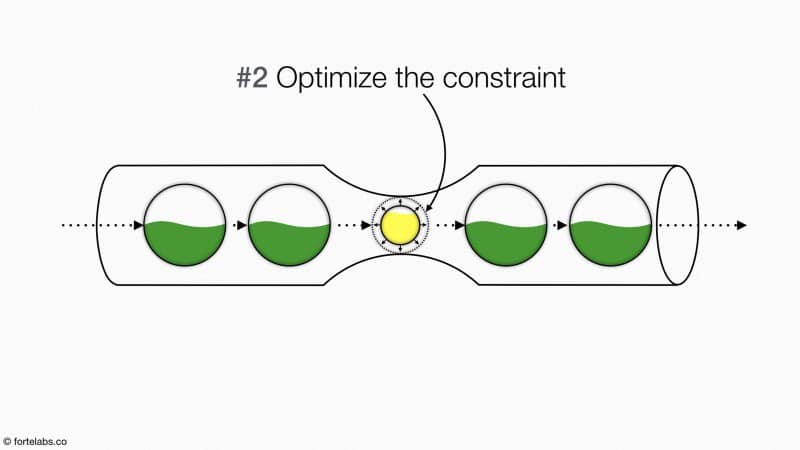
In the previous post, I described how to go about identifying the constraint in a knowledge work organization. The next step, #2 in the Five Focusing Steps, is to optimize that constraint:

Identify the constraint
Optimize the constraint
Subordinate the non-constraints

Read More →

Theory of Constraints 106: DBR at Microsoft

A SERIES OF 5-MINUTE POSTS ON APPLYING PRINCIPLES OF FLOW TO KNOWLEDGE WORK
In the previous post, I told the story of a software engineering team at Microsoft who used the Theory of Constraints to produce dramatic improvements in productivity.

But I hope something bothered you: how exactly did they know which changes to make?

Read More →

Theory of Constraints 101: Table of Contents

A SERIES OF 5-MINUTE POSTS ON APPLYING PRINCIPLES OF FLOW TO KNOWLEDGE WORK
Below you can find all the posts published so far, and a quick 3-point summary of each.

101: INTRODUCTION TO THE SERIES
The basic premise of the Theory of Constraints as outlined in The Goal by Eliyahu Goldratt; the definition of a bottleneck or a constraint; why the only way to improve a system is to improve the constraint

Read More →

Theory of Constraints 105: Drum-Buffer-Rope

A SERIES OF 5-MINUTE POSTS ON APPLYING PRINCIPLES OF FLOW TO KNOWLEDGE WORK
In the previous post, I explained Drum-Buffer-Rope (DBR), the original application of TOC to production environments like manufacturing. We’re now ready to take a closer look at a real-world example that brings together all the ideas we’ve covered in the series so far.

Read More →

Theory of Constraints 104: Using Time to Control Work-in-Process

A SERIES OF 5-MINUTE POSTS ON APPLYING PRINCIPLES OF FLOW TO KNOWLEDGE WORK
In the previous post, I told the story of how Eliyahu Goldratt proposed time as a new mechanism for limiting work-in-process, using a new method he designed called Drum-Buffer-Rope (DBR).

Let’s examine how DBR proposes to fix the situation we left at the end of post #102:

Read More →

Theory of Constraints 103: The Four Fundamental Principles of Flow

A SERIES OF 5-MINUTE POSTS ON APPLYING PRINCIPLES OF FLOW TO KNOWLEDGE WORK
In the previous post, I described how many companies’ embrace of local optima leads to overwork and burnout for employees, and reduced throughput and profitability for the bottom line.

Before we look at what TOC proposes as a solution, we have to take a brief look at the history of flow, beginning with Henry Ford.

Read More →

Theory of Constraints 102: The Illusion of Local Optima

A SERIES OF 5-MINUTE POSTS ON APPLYING PRINCIPLES OF FLOW TO KNOWLEDGE WORK
In the previous post, I argued that many people unknowingly subscribe to a defunct management philosophy: that you can improve the performance of a company as a whole by individually improving the performance of its parts.

Read More →

Theory of Constraints 101: Applying the Principles of Flow to Knowledge Work

The Theory of Constraints is deceptively simple. It starts out proposing a series of “obvious” statements. Common sense really. And then before you know it, you find yourself questioning the fundamental tenets of modern business and society.

Eliyahu Goldratt laid out the theory in his 1984 best-selling book The Goal. It was an unusual book for its time — a “business novel” — telling the story of a factory manager in the post-industrial Midwest struggling with his plant.

Read More →

Meta-Skills, Macro-Laws, and the Power of Constraints

Nearly every science-fiction novel seems to agree on one thing: in the future, work will be indistinguishable from art. Such wide agreement suggests that work is far more than a means of income generation. Even in a robot servant utopia, with all our practical needs taken care of, human work will still have a purpose….

Read More →

Experimental Habit Formation

A new framework for continuous learning One of the key challenges of living and working in the future will be continuous learning and experimentation. I’d like to propose a framework for this type of learning that is both feasible and focused on the individual: experimental habit formation. I believe it can help resolve one of…

Read More →

Topics I Write About Include

Explore Our Articles By Category

Please note that our blog posts may contain affiliate links. As an Amazon Associate, we earn from qualifying purchases.

We’re committed to being transparent about our use of AI tools—you can read our full AI-generated content policy here.